
Baidu
Baidu’s Unlimited OCR 2 reads book-length documents in one pass
An open 3B document-parsing model whose cost per step stays flat however long the document gets, released under the MIT licence.
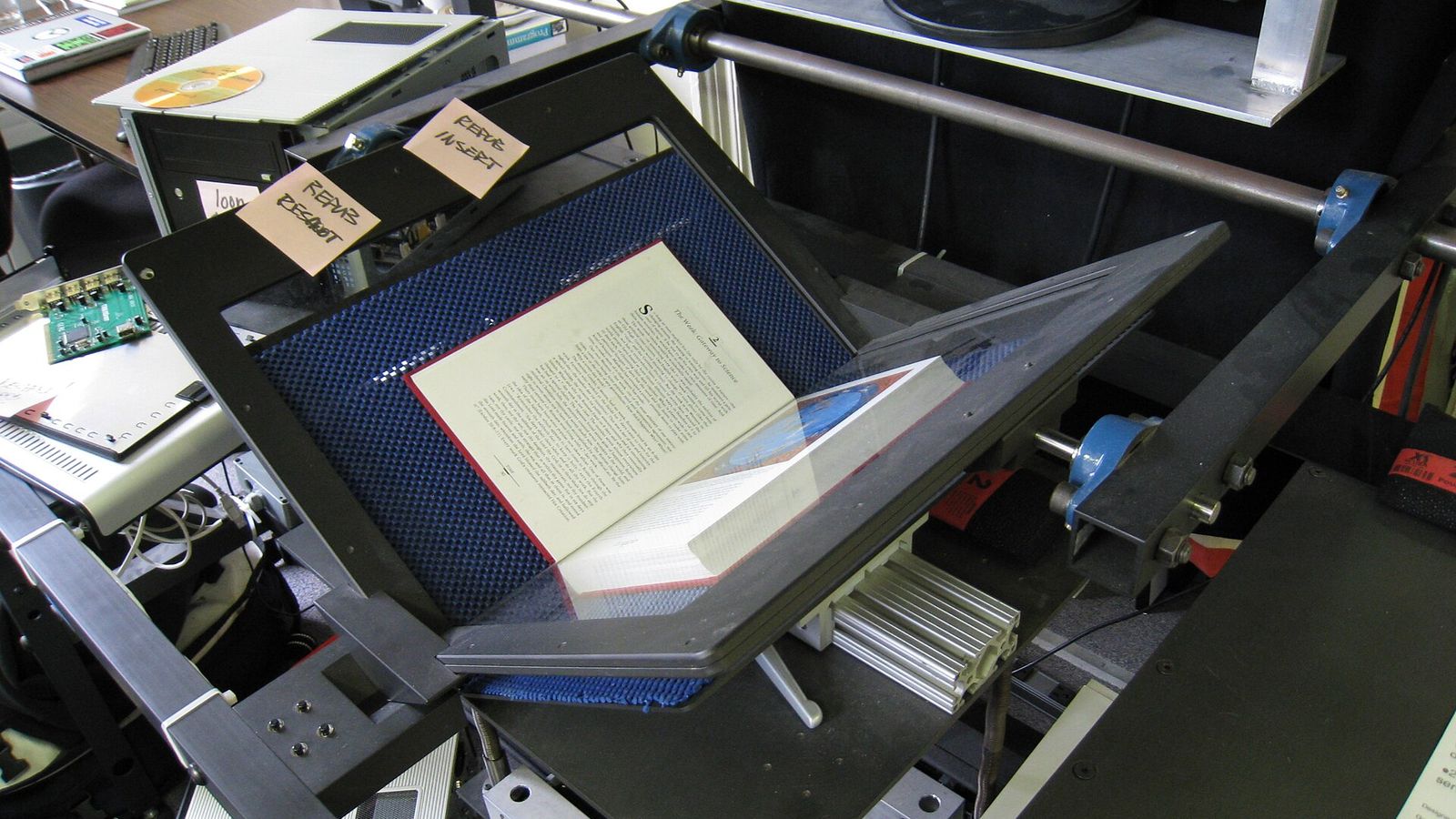
Baidu’s ERNIE team released Unlimited OCR 2 on 27 October 2026, an open document-parsing model built to read very long documents, hundreds of pages, in a single pass. It has about 3 billion parameters and is released under the MIT licence.
The problem it solves
Models that read page images usually keep everything they have seen in memory, so each new page costs more to process than the last. At book length that becomes impractical. Baidu’s paper describes Unlimited OCR 2 as ‘a document parsing model that looks only at what it transcribes’.
The key change is Sparse Reference Sliding Window Attention. Instead of attending to the whole document, the decoder works from a fixed-size set of reference tokens, 512 in Baidu’s example, so speed and memory per step stay nearly constant however long the document grows. The project describes the aim as ‘true, unbounded document parsing within a finite context window’.
Results
At the hundred-page scale, Baidu reports per-step speed-ups of 7.0 times over full attention and 5.6 times over its earlier sliding-window approach. It claims state-of-the-art results on MPDocBench, which tests documents of dozens of pages, and on MarathonDocBench, a new benchmark for hundred-page documents that Baidu released alongside the model. Both are Baidu’s own results, on a benchmark it designed, so expect independent comparisons to follow.
The model is available on Hugging Face, ModelScope and Baidu Cloud. Baidu recommends SGLang for serving; by default it processes ten pages per window and carries context forward from one window to the next.
What it means for your business
Many businesses run on long documents: tenders, strata reports, insurance policies, clinical records, building specifications. Today these are often split, summarised in pieces and stitched back together, which is where details go missing. A model that reads the whole document in one pass, at a steady cost per page, makes full-document extraction more practical.
A 3-billion-parameter, MIT-licensed model can also run on your own hardware, which matters when the documents are confidential. As with any OCR, test it on your own files, especially tables and handwriting, and have a person check the figures that drive a decision. Let the model do the reading so your team can spend its time on the parts that need judgement.
Sources
- Unlimited-OCR repository (opens in a new tab) · Baidu on GitHub
- Unlimited-OCR-2 model card (opens in a new tab) · Baidu on Hugging Face
- Unlimited OCR Works 2 (opens in a new tab) · arXiv
General information only, not legal, financial or professional advice. Check the sources for your circumstances.